Supporting Your Child’s Transition to School

Supporting Your Child’s Transition to School

The day has finally arrived – your child is about to begin their first full day at school.

While this is a significant developmental milestone for your child, it can also be a big step for you as a parent. Being prepared for what’s ahead can provide some much-needed support during this transition.

Skills to Support

Starting school is not just about entering a formal educational setting; there are several non-academic skills that will greatly benefit your child as they embark on this new chapter. Some of these essential skills include:

  • Communication Skills: It’s important that your child can express their thoughts and feelings to those around them. Being able to ask and answer questions about their needs will also be important.
  • Understanding Behaviour Expectations: Knowing what is and isn’t acceptable behaviour is key. Children who are aware of behaviour expectations are better equipped to navigate their new environment.
  • Self-Regulation: At an age-appropriate level, being able to manage their emotions when things don’t go as planned is an important skill for all children.
  • Building Relationships: Having the confidence to build relationships with both adults and peers will help your child feel more secure in their new surroundings.
  • Personal Hygiene: Ensuring your child has a good level of personal hygiene, such as being able to put on their coat and other clothing by themselves and using the toilet independently, are all skills that you can support as a parent.

If your child has attended nursery or pre-school before starting school, many of these skills will have already been nurtured by their practitioners. However, reinforcing these skills at home can provide them with even more support.

Additional Activities to Support the Transition

Here are some extra activities you can do to further ease your child’s transition to school:

  • Reading Stories About Starting School: Reading books about starting school can help your child understand that a change is coming and what to expect.
  • Arrange Playdates: If you know other children who will be starting school at the same time, try arranging a playdate. Having a familiar face at school can offer reassurance on the first day.
  • Involve Your Child in Buying Their School Uniform: Let your child take part in buying their school uniform and talk about it positively. This can help them see it as an exciting milestone rather than something to be feared.

If you have any questions or concerns about how to support your child’s transition to school, please speak to one of our staff members in the Pre-school Room.

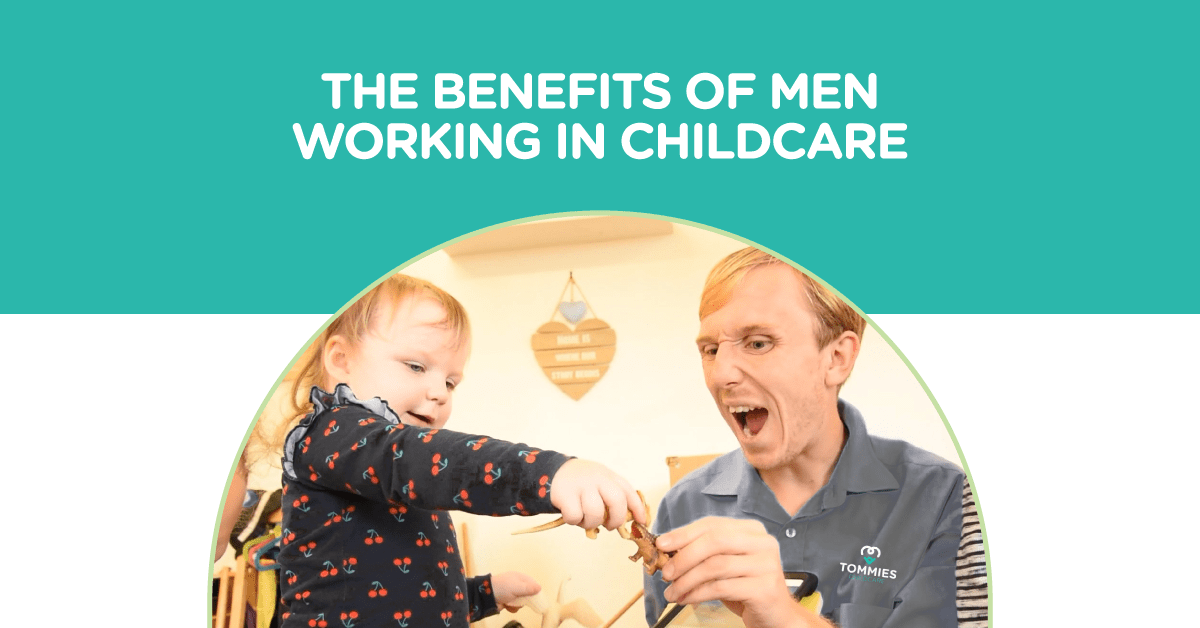
The Benefits of Men in Childcare

The Benefits of Men in Childcare

At Tommies Childcare, we firmly believe that both men and women have crucial roles in a child’s life, particularly in the early years.

While the key qualities we seek when recruiting staff are their passion for working with children, their qualifications, and their eagerness to learn, it’s clear that each gender can bring unique benefits to the childcare environment.

Unfortunately, there is a low number of men working in nurseries, which means many children miss out on the opportunity to develop relationships with male figures in the setting.

Recent official figures show that only 2% of people working in early years education in England are male – a statistic that has actually decreased in recent years (Source: Department for Education – Childcare and Early Years Providers Survey).

It’s disappointing that these low figures have remained largely unchanged for the past 25 years.

The Importance of Male Role Models

The Early Years Alliance in 2024 said, “There is no evidence that women are ‘naturally’ any better at the caregiving elements of early education than men are – and to suggest so or build a workforce on the basis of such an idea is to ‘box in’ female staff to a stereotype that overlooks the possibility of excelling in other skills and areas (like outdoor play for example) …and do the converse to men.”

With the majority of nursery practitioners being female, it’s easy for young children to grow familiar and comfortable with them.

However, we believe having male and female role models is essential for a balanced and enriching early years experience. A diverse team of practitioners can positively shape children’s perceptions of the world around them, regardless of gender.

Tommies Childcare: Our Stance

Although we currently have fewer male nursery practitioners than we would like, we deeply value the contributions they make to Tommies Childcare, just as we do with all our female employees.

We treat all our colleagues equally, regardless of gender, which means there are no exceptions to their roles based on whether they are male or female.

Our male practitioners are fully involved in all care duties, including nappy changing, toileting, and other responsibilities.

We do not make exceptions to this policy, even if requested by parents, as doing so would undermine the individual and devalue their vital role in our organisation.

Our hope is to see more men pursuing careers in childcare, and we are committed to supporting this by providing a positive and inclusive experience for our male colleagues.