

What Do Children Do at Nursery? First Steps Room (1-2 Years)
What Do “First Steppers” Actually Do at Nursery All Day?
Several years ago, we made the decision at multiple nurseries where we had the space, to create First Steps Rooms that cater for children aged 1-2 years. This was driven largely by the difference in development that we notice in children from 1 year onwards.
At this age, children are discovering their independence. Some are taking their very first steps, while others are already on the move, eager to explore everything around them. Our First Steps Rooms offer children the opportunity to develop and explore in a space suitable for their progressing development when at nursery.
The First Steps Room Environment
While the developmental stages of children aged 1-2 are different from those of our very youngest children, these children still require secure attachments to the adults around them to develop and grow.
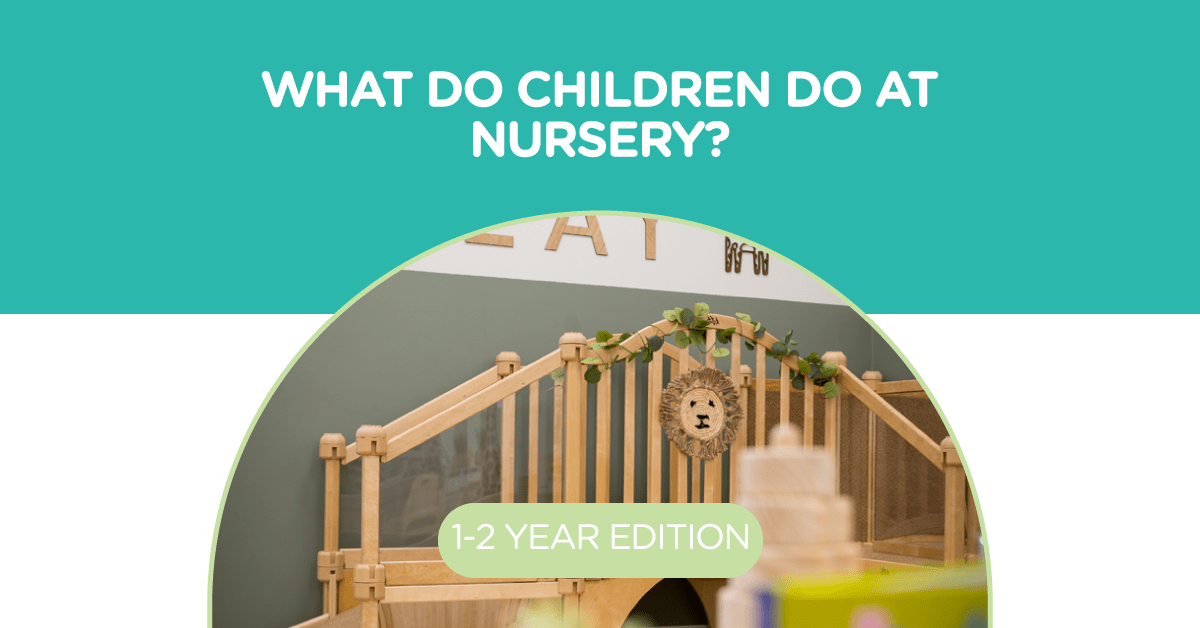
This is why, in our First Steps Rooms, you will see many similarities to our Baby Rooms, with soft furnishings and low-level furniture as staple items. That said, there will be further development of this through more imaginative play, e.g. dolls or a small role-play kitchen, more messy and water play and larger items for growing hands, for instance, larger playing blocks.
Communication at nursery is a key area of development for children aged 1-2, as many begin using spoken language for the first time. They express themselves through gestures, sounds, and early words. We encourage this growth by creating a language-rich environment filled with singing, reading books, and simple conversations.
Routines
Most children around 10 months of age begin to feel heightened emotions that help keep them safe. This means that children become more wary of people they may not be familiar with.
A large number of children often begin their nursery journey at this age, which can make it difficult in navigating this change. Parents may find their child more clingy or upset at the prospect of you leaving them, and whilst this can feel worrying, it is, in fact, a positive sign of emotional development.
Our goal is to assist both you and your child to make the transition from home to nursery as smooth and nurturing as possible.
We are well aware that this can feel like a big change when children move from receiving one-to-one care at home to a nursery environment where one Nursery Practitioner cares for three babies. To help with this transition, we implement several carefully planned approaches:
- An extended settling-in process designed to help children build positive relationships and feel secure enough to separate from their parent or carer when their nursery journey begins.
- For children who are exclusively breastfed but require a bottle at nursery, we kindly ask parents to prepare their child to accept a bottle before their child commences attendance. This helps our nursery team effectively meet your child’s feeding needs.
- Lastly, we request parental support in managing sleep associations that cannot be replicated in the nursery environment, such as breastfeeding to sleep, rocking, or pushchair sleep routines. While we provide reassurance and comfort during nap times, easing these transitions at home before starting at nursery greatly benefits your child’s ability to settle confidently in our care.
Early Learning in the Early Years Foundation Stage (EYFS)
In a First Steps Room, where children may be beginning or continuing their journey in a nursery setting, the attachment stage, typically developing around 8-12 months, plays a crucial role in how children settle, explore, and build relationships.
At this stage, children begin to form strong emotional bonds with familiar adults. They start to recognise who their main caregivers are and show clear preferences for them. This is often when practitioners notice children reaching out to their key person for comfort or becoming upset when separated from a parent or other familiar adult.
These behaviours are a normal and important part of development. In the First Steps Room, they may present as:
- Crying or becoming unsettled during drop-off times
- Wanting to be held by or close to a familiar adult
- Feeling unsure or anxious around unfamiliar people
- Seeking reassurance when tired, overwhelmed, or in a new situation
Rather than seeing this as a difficulty, it ought to be understood as a positive sign that a child is forming secure attachments. When a child feels safe, they are more likely to begin exploring their environment, even if it is only for short periods at first.
The role of a key person in a First Steps Room is especially important during this stage. By providing consistent care, responding sensitively, and building trusting relationships, practitioners help children feel secure in their new environment. Simple actions such as comforting a child when they are upset, maintaining familiar routines, and using a calm, reassuring voice can make a significant difference.
Over time, as children’s confidence grows, they begin to use their key person as a secure base. This means they feel safe enough to move away, explore toys and activities, and then return for reassurance when needed. This balance between independence and security is a key part of early development.
Understanding the attachment stage enables practitioners in the First Steps Room to effectively balance each child’s emotional needs. By working closely with parents and providing a nurturing environment, nurseries help children take those early steps, not just physically but emotionally, building the foundations for future learning and relationships.
Social and Emotional Development
During a typical day in our First Steps Room, social and emotional development remains a key focus as children grow in confidence and begin to explore the world around them more independently. Through a wide range of activities and meaningful interactions, we support children in building strong, positive relationships that help them feel safe, secure, and valued.
Children are encouraged to develop close bonds with their key person and other familiar practitioners, reinforcing a sense of trust and emotional security. Consistent routines and responsive care remain essential at this stage, helping children to feel confident in their environment while navigating new experiences.
Our practitioners support children in recognising and expressing their emotions by responding sensitively to their needs and cues. As children begin to develop their communication skills, we help them to express feelings through words, gestures, and supported interactions. Activities such as singing familiar songs, sharing stories, and engaging in calming sensory play continue to provide comfort and reassurance.
As children grow, they also begin to take part in more social experiences. Group activities encourage early skills such as turn-taking, sharing, and making connections with others. Children may play alongside their peers, observe each other, and gradually begin to interact, building the foundations of communication and cooperation.
The benefits of supporting social and emotional development at this stage are significant. Children begin to develop self-confidence and a positive sense of self, feeling secure enough to explore and try new things. With guidance, they start to understand their emotions and learn simple ways to manage them.
By nurturing these early relationships and social skills, we help children build resilience and form healthy connections with others. The First Steps Room provides a warm, supportive environment where children develop a strong sense of belonging, preparing them for the next stages of their early years journey.
Key Person
At Tommies Childcare, we understand just how crucial secure, trusting relationships are, especially for our youngest children. That’s why, in line with the Early Years Statutory Guidance, every child is assigned a Key Person from our dedicated team of nursery practitioners.
The Key Person builds a close bond with both you and your baby, providing consistent care and support. They also carry out ongoing assessments to monitor your child’s progress and are always on hand to answer any questions or concerns you may have. This approach helps nurture your child’s well-being and ensure they feel safe, confident, and ready to explore their early years setting with joy.
Parent Partnerships
At Tommies Childcare, we know that parents are your child’s first and most important educators. That’s why we’re committed to working closely with you throughout your child’s nursery journey. To support this partnership, we ask parents to complete an ‘All About Me’ form before their little one starts, so we can understand their unique needs and preferences from the very first settling-in session.
Each day, you’ll receive updates through our Famly App, keeping you informed about meal and feeding times, nappy changes, sleep routines, and the exciting activities your child has enjoyed. We also love welcoming parents into our nurturing nursery environment during special events throughout the year. We hold two parent information evenings annually, where you can connect with your child’s key person to discuss their development and progress in detail.
Supporting Your Child’s Early Years Journey at Tommies Childcare
Choosing the right nursery for your child is one of the most important decisions you’ll make as a parent. At Tommies Childcare, we are dedicated to providing a nurturing, safe, and stimulating environment where your little one can thrive from their very first days. Our First Steps Rooms are thoughtfully designed to support early development through loving care, consistent routines, and engaging play-based learning aligned with the Early Years Foundation Stage.
We understand how precious these early years are and are committed to partnering with you to give your child the best possible start. To find your nearest Tommies Childcare nursery and arrange a visit to meet our friendly team, learn more about our approach, and register your child, please get in touch with us today.
We look forward to welcoming you and your little one to the Tommies family.