How do I Start Potty Training?

“How Do I Start Potty Training My Child?”

You’ve probably mastered sleeping through the night by now. Weaning your child has gone well, and things are finally starting to settle down. But now you’re faced with the task of potty training!

You could be in the same boat as many parents and want to get your child out of nappies. However, this can be daunting for both you and your child.

You’ll read a lot of guidance and advice available online or from your Health Visitor or relatives and friends. The most important thing you can do is approach potty training with an open mind.

As you may know, only some parenting advice you read will work for your child. We recommend you be as open-minded as possible when preparing for potty training.

In this blog, we’ll talk you through when the right time to start potty training is, knowing when your child is ready for potty training, and how to get started.

WHEN IS THE RIGHT TIME TO START POTTY TRAINING?

Most parents start thinking about potty training when their child is between 2 and 2 and 1/2 years old. Based on some of our parents’ own experiences, though, your child will show you signs that they are ready to start potty training. This is when you should start supporting the process. Starting the process before these signs are there could be a recipe for failure before you’ve begun.

Letting your child take the lead is an excellent way of ensuring that your child is physically and developmentally ready to move on from nappies to pants. If potty training is instigated when a child is unprepared, you may see unsuccessful results, which could cause problems later.

HOW WILL I KNOW IF MY CHILD IS READY TO START POTTY TRAINING?

Some of the signs that may indicate your child is ready include:

  • Dry nappies for at least an hour or two at a time
  • When your child understands when they are having a wee and may tell you they’re having one
  • Your child can recognise that they have a wet or dirty nappy and pull at it, remove it or ask you to change it
  • Seeing visible signs that your child needs to go to the toilet, such as fidgeting or going somewhere quiet or hidden
  • Showing an interest in sitting on the toilet and/or potty

HOW SHOULD I PREPARE FOR POTTY TRAINING?

Using a potty will be new to your child, so allowing them time to get used to the idea is good. For boys, it’s usually easier to start them off by sitting on the potty before progressing to standing up.

Talk to your child about nappy changes as you do them so that they understand what wee and poo is and what a wet nappy means. If you consistently change their nappy in the bathroom at home, they will begin to realise that this is where people go to the toilet. Getting your child to help you flush the toilet and wash their hands is also a good idea.

Leave a potty where your child can see it and explain what it’s for. Children learn by watching and copying. If you have an older child, your younger child may see them using it, which will significantly help.

Let your child see you using the toilet and explain what you’re doing. Using your child’s toys to show what the potty is for can also help.

There are also several child-friendly books about Potty Training that can support Toddlers’ understanding of Potty Training. Some of our favourites are listed below:

When starting potty training, it is important to allow yourself the time to support your child effectively. I also recommend starting this when no changes are due to occur in your child’s life.

Changes to normal circumstances can be unsettling for young children, so you don’t want to overload them with any additional changes. It’s essential to remain consistent and avoid creating confusion for your child.

Here are 4 tips to bear in mind before you start:

  1. Talk to your child about wee’s and poo’s! I completely understand that this is not something we adults tend to openly discuss; however, it does help younger children to fully understand the process.
  2. It’s important to make the process fun. This can start with a shopping trip for ‘big girl/boy pants’ and a new potty. The more involved your child can be in the process, the better.
  3. Let your little one sit on the potty for a few minutes, even if they don’t do anything. This will help them get comfortable with their new potty. Then, let them practice pulling their new pants up and down.
  4. You can use a reward like stickers to acknowledge when your child does a wee or poo on the potty. Toddlers of this age usually love stickers.

Potty training is easier during the spring and summer months as your little one is not likely to be wearing bulky clothes or items like tights, which can be challenging to take on and off.

SO, LET’S BEGIN

First, ensure that you have a potty close to where your child spends most of their time. It may be helpful to purchase more than one to ensure that if your child needs the toilet when upstairs, they can get to it quickly.

A good time to get your child to sit on the potty is after meals, as food will have started to digest, giving them the urge to use the toilet. As your child gets used to sitting on the potty, you may wish to provide them with a toy or a book to encourage them to do so.

You may begin to notice patterns in your child’s toileting habits, especially when they may need a poo. I recommend leaving their nappies off around this time and encouraging them to sit on the potty. If your child gets upset at having to sit on the potty, do not force it. Place the nappy back on and try again in a couple of weeks.

Children will often start to wee on the potty before they poo. It is important that you praise this when it happens, as this will increase their confidence in using the potty.

Please don’t make a fuss or punish children when they have an accident, as this can leave them anxious and worried. This could also lead them to take longer to master this new skill.

Remember to think about the types of clothes your child is wearing when potty training. They need to be easy to take off.

PULL UP’S VS PANTS

A wide range of nappies are on the market, and many big brands advertise pull-ups as the best thing to use to support potty training. This is a misconception and, based on some of our parents’ own experiences, only hinders the process. Pull-ups do not allow children to feel uncomfortable when wet or soiled, which instigates them to try and avoid it by using the potty.

While not using pull-ups may result in more accidents, it will help your child, in the long run, to understand that they do not want to feel wet and encourage them to act before they have an accident.

When children transition from nappies to pants, you may feel anxious about taking them outside without a nappy. Pull-ups are great in these instances as they do not absorb as well as nappies and at least give children some indication that they have had a wee. However, children should still be encouraged to use the potty or toilet.

POTTY TRAINING AT NIGHT TIME

It is important that you allow your child to be effectively potty trained during the day before trying to start training overnight. A good indicator that children are ready to train overnight is if they wake on several mornings in a row dry or only slightly damp.

Ask your child to use the potty just before they go to bed, and make sure it’s close by so they can use it if they need a wee during the night. There are bound to be a few accidents, so a waterproof bedsheet to protect your child’s mattress is a good idea.

Just like with daytime potty training, praising your child for success is important. If things aren’t going well, stick with nappies at night and try again in a few weeks.

REMEMBER, ACCIDENTS HAPPEN

Of course, there will be accidents. Your child will not always make it to the potty on time or be so engrossed in playing or whatever they’re doing that they forget. Reassure your child that everything is OK and that they can try again later. Don’t get upset at your child for having an accident.

Potty training can be stressful for toddlers, and getting upset only makes them feel more anxious. Getting angry, impatient and stressed will rub off on your toddler and could even lead to them ‘withholding’ (holding their poo in) and becoming constipated.

It can also be highly frustrating to think that your little one has mastered potty training, only for them to have a string of accidents. Remember that potty training is a long process, and there will be setbacks now and again.

Whenever you choose to start potty training, good luck!

What is Tax-Free Childcare?

For many parents, childcare costs can be a burden. Fortunately, there are ways parents can get help with reducing the cost of childcare, such as the tax-free childcare scheme.

The tax-free childcare scheme was first introduced in April 2017 to provide parents with a 20% tax-relief on childcare services. Per year, parents can save up to £2,000 on childcare costs through the tax-free childcare scheme.

Tax-free childcare will eventually replace childcare vouchers. Since tax-free childcare was introduced, childcare vouchers were closed to new entrants. Only parents who claimed childcare vouchers before October 2018 are able to use them.

How does it work?

You use the tax-free childcare scheme by creating an account through the government website. Once your account has been set up you pay money into it like you would with a bank account. The government then tops up your account with their contributions.

Example: For every £8 you pay into the account; the government contributes £2

Anyone can pay into your tax-free childcare account, so it’s a great way for relatives and extended family such as grandparents to help with your childcare costs. You can pay as much or as little into the account as you want. You can also build up credit to use at a later date. There are no costs to using the scheme.

From your account, you can then pay your childcare provider so long as they are also signed up to the scheme. You should bear in mind that it can take up to 5 working days for the money to be transferred to a childcare provider, so make sure you plan your payments in line with your childcare provider’s payment terms.

Is the scheme available to anyone?

The eligibility criteria for the tax-free childcare scheme is as follows:

  • Your child must be 11 years old or younger
  • If your child has a disability, they will be eligible until they are 17 years old*
  • Tax-free childcare is only available for working parents**
  • Self-employed parents are eligible
  • You or your partner must not earn more than £100,000 in the current tax year
  • You must be a citizen of the UK or European Economic Area (EEA)
  • Once you have applied you must re-confirm your eligibility through your account portal every 3 months.

*The government will increase their contributions up to a maximum of £4,000 per year for disabled children.

**You and your partner must both be working at least 16 hours at the National Minimum or Living Wage

How do I apply for tax-free childcare?

You can apply by visiting www.gov.uk/apply-for-tax-free-childcare.

You’ll need to have your National Insurance (NI) number or Unique Taxpayer Reference (UTR) to hand when applying.

You can only have one account per child, so you will need to decide between yourself and your partner who will register the account.

Where can I use tax-free childcare?

You can use the scheme for any formal childcare so long as the provider is registered with Ofsted, the Early Years Register or the Childcare Register. This will include most day nurseries, pre-schools, playgroups, registered childminders, nannies/au pair or breakfast and out of school clubs.

The scheme cannot be used to pay for informal childcare such as a babysitter or family providing informal childcare.

Childcare providers must also be registered with the scheme for you to pay them through your account. If your provider is not registered, then let them know.

How much money will I save?

For every £8 you pay into your account, the government will add £2. The maximum the government will contribute to your account per year is £2,000. However, if your child is disabled, the government will contribute a maximum of £4,000 per year.

Can I take money out of my tax-free childcare account?

You can take money out of your account if you need to. You can do this online. Please note, the government will deduct any contribution they have already made from any amounts you withdraw from your account.

I am already using childcare vouchers. Should I switch to tax-free childcare?

Childcare voucher schemes are now closed to new entrants; however, they are still open to those who registered before the tax-free childcare scheme started. If you prefer to continue using childcare vouchers, then you are free to do so. You can find out whether you wold be better off switching to the tax-free childcare scheme here.

Can I use the tax-free childcare scheme alongside my 15- or 30-hours funding?

You can still use the scheme even if you’re claiming for the 15- or 30-hours funding. This is helpful if you still have a childcare bill to pay after your funding has been deducted.

Can I use tax-free childcare with tax credits or universal credit?

You cannot use the scheme at the same time as claiming working tax credits or universal credit. As soon as you make a successful application for a tax-free childcare account your working tax credits or universal credit payments will be withdrawn.

Ultimately, whether tax-free childcare is the best option for you to reduce your childcare costs will depend entirely on your circumstances. Why not use the childcare calculator to see the best way for you to save money on your childcare costs?

If you found this blog helpful, then you might benefit from reading about other ways you can reduce your childcare costs, such as Nursery Entitlement Funding (NEF).

23 Elf on the Shelf Ideas

23 Elf on the Shelf Ideas

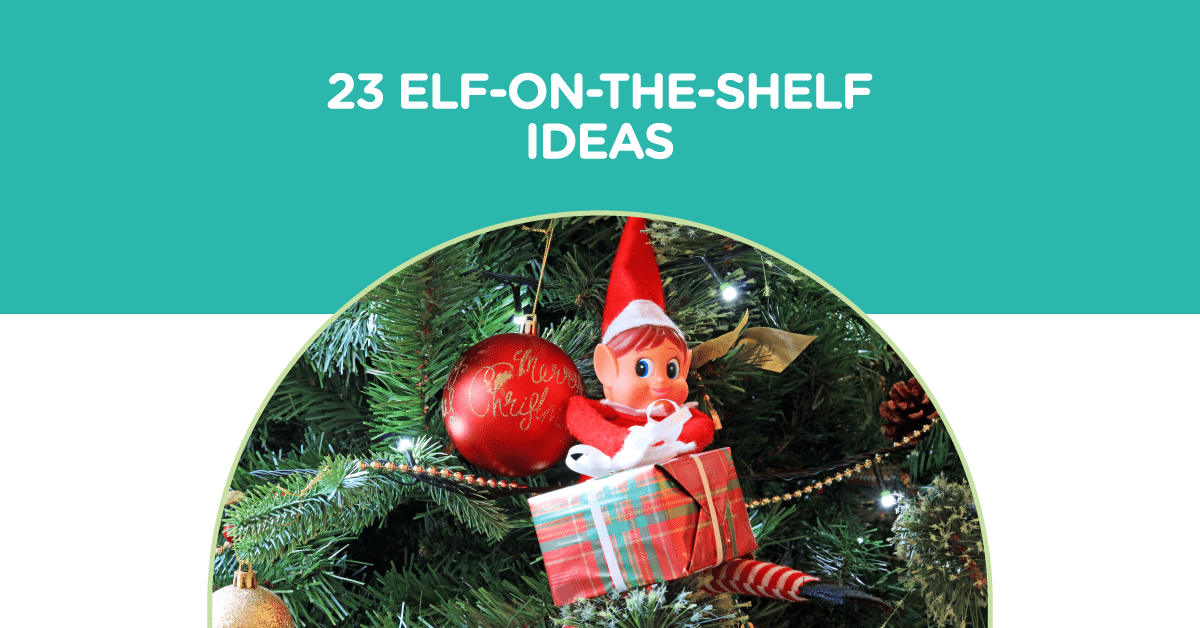
Elf on the Shelf is a modern Christmas tradition that has recently grown more popular with young children.

Like most Christmas traditions, it helps to bring the magic to life for our children. The thought of a mischievous elf getting up to no good during the night only to be caught out the following day is so exciting for our little ones.

The only snag with Elf on the Shelf is that it requires an awful lot of effort throughout the month from us: the parents.

Many parents may even hope their children haven’t heard about Elf on the Shelf so they can avoid it altogether! It’s understandable; preparing for 23 escapades over a month is quite an undertaking.

However, we’re here to do half the battle for you by giving you all the ideas. Then, all you have to do is bring them to life.

But first, remember the golden rule: Children should not touch the elf, or he will lose his magic and must return to the North Pole on Christmas Eve.

So then, let’s get into the festive spirit.

1) Candy Cane Garden

Three days’ worth of ideas in one: a Candy Cane Garden!

Use crushed chocolate cookies as “soil” and watch the peppermint grow from round candies to full candy canes.

2) Broccoli Christmas Trees

Arrange the broccoli into the shape of a Christmas Tree and top it with cherry tomatoes and peppers to look like decorations. They will then complete their tree with a yellow pepper cut in a star shape.

3) Balloon Baubles

This one always gets children excited and is really easy to do. Blow up several colourful balloons and attach them to your tree like baubles.

4) On Your Marks, Get Set, Bake!

Set up a Christmas baking scene for your shelf. This is pretty easy to do and can be adapted depending on what ingredients you have in your kitchen.

5) Sprinkle (Snow) Angels

For this one, pour some sprinkles on a surface in your home and place the elf on top to make a sprinkle angel.

6) Self-Portrait Family Photo

Why not make the elf an official family member and add them to your family photo?

7) Elf Clubhouse

Pop your elf in a cardboard “Santa Scout Only Clubhouse” to keep an eye on good behaviour.

8) Loo Roll Snowman

This is another easy but fun one to do. Make a snowman out of loo rolls and pop the elf in the top!

9) Cup of Marshmallows

Who wouldn’t want to sit in a big cup of marshmallows? So fill a coffee cup with marshmallows and allow the elf to chill near your kettle or coffee machine.

10) Movie Night, Anyone?

Set your elf up on the sofa with the TV remote and a bowl of popcorn!

11) Our Little Boy Is Growing Up

A little boy wants to be just like his Dad, and so does your elf! Your little ones will find it hilarious to wake up to see the elf shaving his beard.

12) Something Fishy is Going On

A great surprise for your little ones is to see the elf fishing for tasty treats!

13) Snowball Fight!

Pit your elf against one of your children’s favourite toys in a snowball fight (use little balls of paper for the snowballs).

14) Dear Santa

Type or write a letter to Santa Claus from the elf saying that he won’t make it back to the North Pole in time for Christmas!

15) Skiing Is the Next Best Thing to Having Wings

Let the elf take a little ski trip down the stairs. You can fashion some skis out of lollypop sticks and put a streak of toilet paper down the stairs to create a snow trail.

16) That’s Not Your Ice Cream!

Pop the elf in the freezer and stage an ice cream heist!

17) Those Don’t Look Like Stockings

This one gets a lot of giggles. Let your elf replace your Christmas stockings with your family’s underpants!

18) A Christmas Decoration Hunt

Let your elf hide some ornaments from the Christmas tree to create a special hunt for your child to try and find them the next day.

19) Loo Roll Christmas Tree

Wrap your Christmas tree in loo roll to show just how naughty the elf can be.

20) Drive-In Movie

Set up a few toy cars in front of a smartphone or tablet to set the scene for a drive-in movie event.

21) Pom Pom Ball Pit

Create a fun ball pit for the elf out of lots of pom poms!

22) Giant Bubble Bath

Blow up a mixture of white and clear balloons and put them in the bathtub. This one often gets a priceless reaction!

23) Self Portrait

Last but certainly not least is the self-portrait. Draw a picture of the elf and position him to imply that he has drawn it himself.

There you have it! 23 great Elf on the Shelf ideas to add a dusting of Christmas magic this year.

Getting Your Child Emotionally Ready For Nursery

Getting Your Child Emotionally Ready For Nursery

Being pregnant is a massive milestone in any parent’s life. As you look towards your maternity leave, there is no further thought in your mind than the day your baby starts nursery. Before you know it, however, your maternity leave will be over, and you’ll be preparing for your baby’s first day at nursery.

But how do you ensure that your child is ready for nursery?

Acknowledge Your Feelings

Having a baby is, naturally, a highly emotional time. You’ll face the tricky combination of feeling delighted about your newborn and the difficulties of sleepless nights and a range of hormones that seem to dictate how you feel each day. As the end of your maternity/paternity leave approaches, you will likely feel further heightened emotions and anxiety about the idea of leaving your baby in the hands of your chosen nursery.

It can’t be overstated that the way you feel is entirely normal. Parents should not feel embarrassed by the anxiety which is often felt at this time. You and your family face a significant change, so feeling upset or concerned is a normal part of your situation.

Tackling Separation Anxiety

During the first 9-12 months of your child’s life, you have probably been their primary carer and, therefore, the person with whom they feel the strongest attachment. Early attachment in babies can happen anywhere from 6 months to 3 years and is a normal part of their development. Your baby may cry when you leave the room or feel very upset when held by people other than you.

When children experience separation anxiety, parents can find it hard to leave their child at a nursery. There are some steps that you can take to support your child during their first separation from you and when they start at the nursery:

  • Try short separations from your child initially (this could be with extended family members).
  • Leave a comforter with your child, i.e. a dummy, teddy bear, or blanket.
  • Make saying goodbye a positive experience by smiling and waving (babies can often pick up negative emotions such as tension or anxiety).

Ratios – Moving From 1:1 To 1:3

When at home, you will often be able to give your baby 1:1 time, or you may have to share this time with their siblings.

Nursery environments, however, are very different to those at home. With ratios to adhere to, our lowest ratio for the youngest children is 1:3, meaning that it is not always possible for children to have a similar 1:1 relationship that they are used to at home. For most babies, this poses no problem as they show curiosity in exploring their new environment. For some children who have only been with their primary carer, though, they may feel unsettled at first.

Sleeping Patterns

As a parent writing this blog, I know from personal experience that maintaining my little boy’s sleeping arrangements at his nursery was vital to the transition from home to nursery life. Whilst our nursery teams will support existing sleep routines, you should be prepared for some adaptations to ensure that sleeping works at both home and the nursery.

When children are at home, they tend to sleep alone in an uninterrupted space. They may even sleep on you. When they start at nursery, though, this can be one of those tasks that takes a little while to fine-tune. When at nursery, children are often sleeping in a shared space with other children, which can be a big adjustment for some children as they learn to adapt to their new surroundings.

For health and safety and ratio reasons, children will sleep in a coat or mat-bed (age-dependent) to sleep. For children who do not sleep well in their cot or bed at home, this can be another change that they will need to adapt to when at nursery. We encourage parents to prepare their children for this by starting at home first to make the transition easier to manage at the nursery.

Using Comforters To Settle Your Child

Comforters provide children with the security they need to feel safe and relaxed. A comforter can be particularly important for children when transitioning into a new environment, such as a nursery. At our nurseries, we support the need for comforters, but it can be helpful to know more about the types of comforters you might consider:

Dummies

Dummies are a typical comforter used to reassure and settle children. Contrary to what you may have heard about dummies, there is no evidence to suggest that they are detrimental to children’s development (that is, until their teeth start to come through).

You may find it helpful to read our blog about dummies: “Should I Give My Child A Dummy?

As children start to gain teeth and use language to communicate, we encourage them to have their dummies at sleep time only. If your child is over the age of one and has a dummy on demand, this may be something you want to consider working on at home.

Blankets/Cuddly Toys

If your child has a favourite blanket or cuddly toy that they cannot sleep without, please ensure that you provide this to the nursery for them. You may wish to purchase an additional blanket/cuddly toy that can remain at the nursery permanently. The last thing you would want to realise is that the blanket/cuddly toy has been left at the nursery when your child needs it at home!

Breastfeeding

Breastfeeding your child is encouraged and supported by health professionals during your child’s earliest years. It is a popular choice for many parents to breastfeed their child. Here at Tommies Childcare, we support any parent’s choice to breastfeed their child and welcome parents to provide breastmilk when required for their child to have at the nursery.

However, children will need to take their milk from a bottle when at nursery. If your child is not used to having a bottle, this can be a strange experience for children if used to having their milk from the breast only. We encourage parents to try bottle feeding (whether breastmilk or formula milk) their baby before they start at nursery to ensure that we can manage the transition smoothly.

Settling-in Sessions

As part of the Tommies Guarantee, we offer parents unlimited settling-in sessions. Settling-in sessions provide parents and children with as much time as needed to feel comfortable in the nursery environment.

Parents must allow their child enough time to allow their child to settle into nursery life. Some children find this more straightforward than others, with some children settling almost instantly and others needed 1-2 weeks.

Routine

At Tommies, we aim to work in partnership with parents to ensure that the transition from the home to the nursery is as seamless as possible. Keeping communication open and frequent with parents and their child’s Key Worker is a critical part of us getting it right, so please feel comfortable sharing any information needed to support your child during their first few weeks at their new nursery.

If you found this blog helpful, you may also gain some insights from our blog about settling in at nursery:

How Long Should It Take To Settle Into a Nursery?