What Do Children Do in a Preschool Room? 3+ Years
For many families, the Preschool Room feels like a big milestone.
It is often the final stage of a child’s nursery journey before they move on to school or a school nursery. By this point, children have usually built many of the early skills they first began developing in our Baby, First Steps, and Toddler Rooms.
In our Preschool Rooms, we see those skills grow even further.
Children become more confident in their communication. They begin building deeper friendships. They show more independence in their routines. They ask bigger questions, share more of their ideas, and start preparing for the next step in their early education.
But preschool is not about rushing children into formal learning.
At Tommies, children continue to learn through purposeful play, warm relationships, and everyday experiences that help them feel safe, capable, and ready for what comes next.
What do children do in a preschool room?
Our Preschool Rooms are designed for children aged 3 and over, although room arrangements can vary slightly between nurseries depending on age groups, layouts, and children’s needs.
This stage is all about helping children build on what they already know.
That might mean becoming more confident when talking to adults and other children. It might mean learning how to take turns, manage emotions, solve small problems, or become more independent with things like handwashing, toileting, putting on coats, tidying away, or serving themselves at mealtimes.
These may seem like small everyday moments, but they support important core skills for starting school, including communication, independence, social and emotional development, and physical development.
Children in our Preschool Rooms are still young, and play remains central to everything they do.
Through play, children can explore early maths, mark-making, storytelling, construction, role-play, creative activities, outdoor learning, music, movement, and far more. These moments might look simple from the outside, but they are helping children practise the skills they will use throughout school and beyond.
Our Preschool Rooms are designed for children aged 3 and over, although room arrangements can vary slightly between nurseries depending on age groups, layouts, and children’s needs.
This stage is all about helping children build on what they already know.
That might mean becoming more confident when talking to adults and other children. It might mean learning how to take turns, manage emotions, solve small problems, or become more independent with things like handwashing, toileting, putting on coats, tidying away, or serving themselves at mealtimes.
These may seem like small everyday moments, but they support important core skills for starting school, including communication, independence, social and emotional development, and physical development.
Children in our Preschool Rooms are still young, and play remains central to everything they do.
Through play, children can explore early maths, mark-making, storytelling, construction, role-play, creative activities, outdoor learning, music, movement, and far more. These moments might look simple from the outside, but they are helping children practise the skills they will use throughout school and beyond.
What might a typical day include?
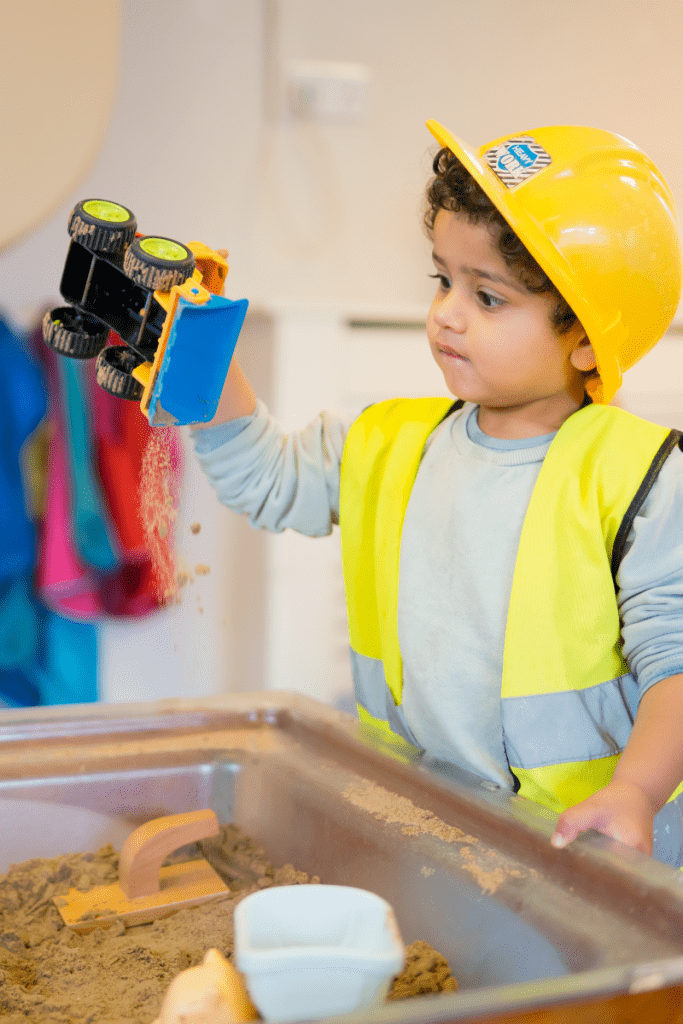
Every day is slightly different, but a day in the Preschool Room might include time to explore the room, outdoor play, stories, songs, group time, creative activities, role-play, construction, mealtimes, quiet moments, and plenty of child-led play.
Children may spend part of the day following their own interests and part of the day joining in small-group experiences, routines, conversations, or activities supported by our nursery team.
This balance helps children enjoy their day while gradually building the confidence, independence, and attention skills they will need as they get closer to school.
The Preschool Room environment

Our Preschool environments are carefully planned to support curiosity, independence and a love of learning.
Each room is designed to feel like a nurturing space where children can explore, make choices and follow their interests. There are areas for imaginative play, construction, books, mark-making, creative activities, puzzles, small-world play, and open-ended resources that can be used in many different ways.
There is also space for quieter moments. A quiet space can help children rest, look at books, regulate their emotions, or spend time with an adult when they need a little reassurance.
We follow an In-the-Moment Planning approach, which means our team observes what children are interested in and uses those interests to support their next steps.
Rather than expecting every child to do the same activity at the same time, our practitioners look at the children in front of them and ask:
What are they interested in?
What are they trying to understand?
What skills are they beginning to practise?
How can we build on this moment?
For example, if children are interested in building towers, our team might introduce language around height, balance, size, and shape. If children are pretending to visit a shop, we might support early maths through counting, sorting, exchanging pretend money, or writing shopping lists. If children are fascinated by insects in the garden, we might encourage observation, questions, drawing, books, and conversations about the natural world.
This helps children learn in a way that feels meaningful, engaging, and connected to their own curiosity.
Communication and language development
Language continues to develop rapidly during the preschool years.
In our Preschool Rooms, children are supported in expressing their thoughts, listening to others, asking questions, explaining their ideas, and using new vocabulary through everyday conversations and play.
Our team supports this by speaking with children throughout the day, introducing new words, asking thoughtful questions, and giving children time to respond.
Stories, songs, rhymes, role-play, group discussions, and shared activities all help children strengthen their communication skills.
This matters because strong communication supports so much more than talking. It helps children build friendships, manage feelings, follow instructions, share ideas, solve problems, and feel confident in new situations.
Early maths, literacy, and mark-making

In the Preschool Room, children are introduced to early maths and literacy in natural, playful ways.
This might include counting objects during play, comparing sizes, spotting shapes, talking about patterns, measuring ingredients in the mud kitchen, sorting resources, recognising numbers, or using language such as more, less, bigger, smaller, full and empty.
Early literacy might include looking at books, listening to stories, joining in with rhymes, recognising their name, making marks with pens, chalk, paint or sticks, and giving meaning to the marks they create.
Mark-making also supports fine motor skills, as children strengthen the small muscles in their hands and fingers that they will later use for writing. Just as importantly, it gives children another way to explore self-expression, share ideas and develop creative thinking.
At this stage, we do not want learning to feel pressured.
Instead, we create opportunities for children to explore these skills in ways that feel enjoyable, purposeful, and connected to their play.
Outdoor play every day

Outdoor play is an important part of nursery life at Tommies.
As part of the Tommies Childcare Guarantee, children have the opportunity to play outdoors every day they attend nursery, whatever the weather.
For preschool children, outdoor play offers so many opportunities for learning and development. Children can run, climb, balance, dig, build, explore, investigate and take part in more physically challenging play with the support and supervision of our team.
This helps children develop their gross motor skills, physical confidence and coordination. It also gives them space to test ideas, work together, take appropriate risks and enjoy the freedom of being outside.
We ask families to provide suitable clothing for different weather conditions so children can enjoy outdoor learning safely and comfortably throughout the year.
Routines in the Preschool Room
Routines continue to be important in the Preschool Room, but they are often more flexible than in our younger rooms.
Many preschool children no longer need a daytime sleep, bottles, or the same level of personal care as younger children. This means the day can allow more time for extended play, group activities, outdoor exploration, and child-led learning.
However, routine still plays a very important role.
Knowing what comes next helps children feel safe, settled, and secure. It also supports independence, responsibility, and confidence.
In the Preschool Room, children may be encouraged to help with simple routines, such as:
washing their hands before meals
helping to tidy away
putting on coats and shoes
finding their belongings
serving themselves where appropriate
helping prepare for activities
listening during group times
understanding transitions during the day
These everyday moments help children practise the independence they will need as they move closer to school.
Preparing children for school
One of the biggest questions parents have at this stage is often:
“Will nursery help my child get ready for school?”
The answer is yes, but school readiness is about much more than recognising letters, counting numbers, or writing a name.
Those early skills matter, but they are only one part of the picture.
For us, school readiness is about helping children feel confident, secure and capable enough to take the next step in their education.
That includes developing the key skills children need to start school, such as communicating their needs, building relationships, managing emotions, following simple instructions, trying new experiences, coping with small changes, and beginning to do more for themselves.
It is also about emotional growth. Children need time, reassurance and practice to understand their feelings, manage frustration, build resilience and feel confident in a new environment.
In practice, this happens through ordinary nursery moments every day. A child might practise listening during group time, learn to wait for a turn during a game, ask an adult for help when something feels tricky, or work through a small disagreement with a friend. They might put on their own coat before going outside, serve part of their lunch, tidy away after an activity, or keep trying when a tower falls down.
These everyday moments all help children build the confidence, independence, and resilience they will need when they move on to school.
Some of the skills we support in our Preschool Rooms include:
listening and following simple instructions
taking turns and sharing
concentrating on activities they have chosen
building friendships
managing feelings with support
developing confidence and resilience
growing in independence
asking for help when they need it
beginning to solve small problems
recognising numbers, letters, and sounds through play
using books, stories, and mark-making in meaningful ways
We want children to leave Tommies feeling ready for what comes next, but not because they have been rushed into formal learning before they are ready.
We help them build the everyday skills, confidence, and emotional security they need to feel more prepared for school life.
The role of the Key Person
Every child at Tommies is supported by a dedicated Key Person.
In the Preschool Room, the Key Person continues to play an important role in helping children feel secure, understood, and supported as they grow in confidence and prepare for their next stage.
Your child’s Key Person gets to know their interests, routines, strengths, friendships and individual needs. They observe your child’s development, support your child’s next steps and share your child’s progress with families in a clear and meaningful way.
As children approach school age, the Key Person can also support conversations about independence, confidence, communication, and school readiness.
Having a trusted adult at nursery gives children the confidence to explore, try new experiences, and build positive relationships with others.
Working in partnership with families
Parents and carers know their child best, and working together helps us provide the strongest support.
Before your child starts nursery, we ask families to complete an All About Me form so we can learn more about their routines, interests, likes, dislikes, and individual needs.
Throughout your child’s time in the Preschool Room, we continue to share updates through the Famly app, including information about meals, toileting, activities, learning moments, and special parts of their day.
We also encourage regular conversations with your child’s Key Person, as well as parent consultations and nursery events.
As children move closer to school, this partnership becomes especially important. Together, we can support your child’s confidence, independence, and emotional readiness, so the transition feels as smooth and positive as possible.
A final step in the Tommies journey
The Preschool Room is a special stage of nursery life.
It is where children bring together so many of the skills they have been building since their earliest days with us. They become more independent, more confident, more curious, and more ready to take on new experiences.
At Tommies, we want every child to leave nursery feeling safe, valued, and ready for what comes next.
Not because they have been rushed to grow up, but because they have been supported at their own pace by people who know them, care about them, and understand what they need.
That is what our Preschool Rooms are all about.