In November 2025, Ofsted fundamentally changed how it reports inspection findings for nurseries, pre-schools, childminders, and all education providers across England.
If you have a child in early years care or are researching nursery options, understanding the new Ofsted report cards may help in making informed decisions about your child’s early education.
What Has Changed?
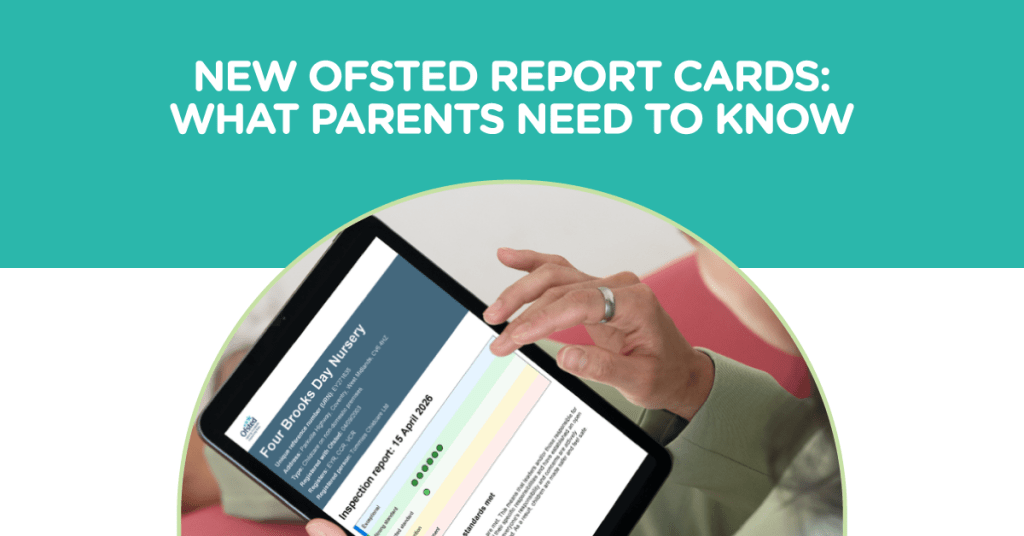
In November 2025, Ofsted stopped using single words such as “Outstanding” or “Good” to grade nurseries. Instead, parents will see colour-coded report cards showing separate grades for different areas. Ofsted says this gives parents a more detailed picture of how a nursery setting is performing.
In practice, this means that all nurseries, including all Tommies Childcare settings, are now graded separately on the following areas:
- Inclusion
- Curriculum and teaching
- Children’s welfare and well-being
- Behaviour and routines
- Achievement
- Leadership and governance
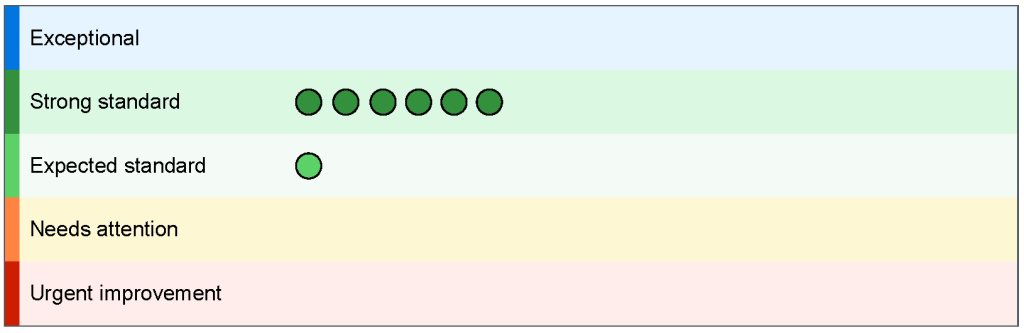
The new system uses a five-point grading scale:
- Exceptional
- Strong Standard
- Expected Standard
- Needs Attention
- Urgent Improvement
Safeguarding is also assessed. However, as Safeguarding is a basic requirement of all nurseries, it is judged simply as “Met” or “Not met”.
It is important to understand that the new report cards cannot be directly compared to the old Ofsted grades.
The grading scale and inspection methods have changed, so parents should read both historic reports and the new report cards (if available) when researching a nursery.
The New 5-Point Ofsted Grading Scale Explained
Under the new inspection framework, nurseries are graded on a five-point scale for each inspection area, rather than receiving a single overall grade. This approach is intended to give parents and families a more detailed insight into different aspects of a nursery’s standard of care and early education.
Here is what each of the new grades means:
Exceptional
This is the highest grade that can be awarded.
According to Ofsted’s guidance, it is reserved for practice “among the best nationally”. Nurseries receiving this grade are doing things that Ofsted believes should be shared with other providers to help them improve. This may include innovative approaches to early years curriculum or outstanding inclusion for children with special educational needs.
Strong Standard
This grade recognises excellent, consistent work that is making a real difference for children over a sustained period.
A Strong Standard rating indicates performance above and beyond what is simply required, with clear and positive impacts on children’s learning and well-being.
Expected Standard
The Expected Standard is shown in light-green on report cards and represents what Ofsted believes every nursery should be achieving.
This is not a minimal “pass”. Instead, Ofsted describes it as a high bar, meaning the nursery “is doing everything it should be doing” for children’s education, care, and safety.
Needs Attention
This grade indicates that a specific area is not yet at the Expected Standard.
Importantly, this is not a fail. It highlights where work needs to be done before issues become bigger problems.
Parents should read reports in full to understand exactly what needs improvement, whether that relates to record-keeping, outdoor learning and facilities, or aspects of daily routines.
Urgent Improvement
Ofsted states that this grade indicates serious weaknesses. Nurseries receiving this grade often face closer monitoring inspections, involvement from the local authority, and support plans to address concerns promptly.
Comparing “Expected Standard” Nurseries with Formerly “Good” or “Outstanding” Nurseries
Ofsted has explicitly said that these new grades cannot be directly translated back to the old four-grade scale (Outstanding, Good, Requires Improvement, and Inadequate). Therefore, parents should avoid trying to match terms like “Expected Standard” with grades such as “Good” or “Requires Improvement”.
How Nurseries Will Be Judged Under the New Report Cards
Early years providers are inspected using evaluation areas specifically tailored to what nurseries and pre-schools provide.
Below is a table that neatly explains what is inspected as part of each evaluation area:
| Evaluation Area | What It Covers |
| Inclusion | How well the nursery meets the needs of all children, especially those with Special Educational Needs and Disabilities (SEND) |
| Curriculum and Teaching | Quality of the early years curriculum and teaching methods |
| Achievement | How children progress in their learning and development |
| Behaviour and Routines | How the setting supports positive behaviour, personal development, and daily routines |
| Children’s Welfare and Well-being | Personal development, well-being, and care for children |
| Leadership and Governance | How effectively leaders manage and improve the setting |
Each of these areas receives one of the five grades on the new scale. This means a single nursery might have different grades across its report card.
For example, a setting could achieve Strong Standard for Children’s Welfare and Well-being, but Needs Attention for Behaviour and Routines.
Safeguarding is treated differently from other areas. Ofsted records this simply as “Met” or “Not met” because keeping children safe is a basic, non-negotiable requirement for all nurseries.
Report cards include short narrative paragraphs explaining why a particular grade was given and what inspectors found during their time when observing staff and children.
Ofsted inspectors are expected to consider children’s ages, the number of childcare places, and the needs of children with SEND when making judgements.
Parents should expect to see a mix of grades across a report card. It will be common, when looking at report cards, to see nurseries that are strong in some areas and need attention in others.
When a new report card is published, previous Ofsted reports for that nursery remain viewable but are listed lower on the provider’s page for historical reference. This allows parents to see both the current assessment and the inspection history.
We encourage parents to take time to read both the grades and the written explanations, rather than focusing only on colours or labels. The detailed descriptions give a rounded understanding of everyday life for children at that particular nursery.
How Parents Can Use the New Report Cards When Choosing a Nursery
The new system may feel more complex at first glance, but it actually provides more detailed information when comparing nurseries and making informed choices for your child.
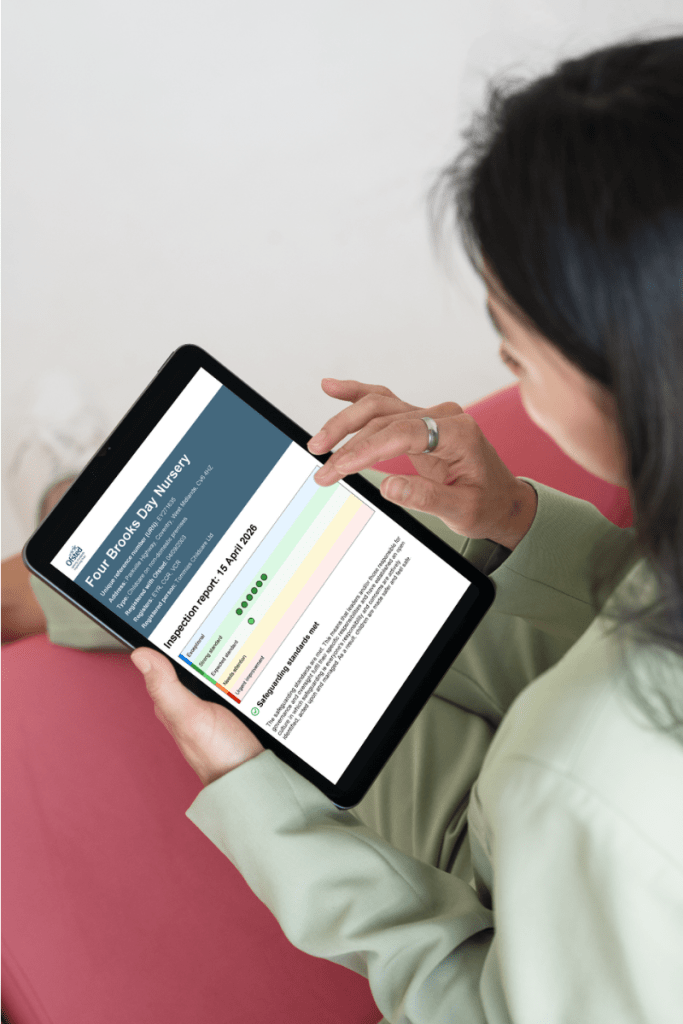
When reviewing a report card, we suggest parents take this approach:
- Check safeguarding first – Look for “Met” status, which is essential for any nursery you consider.
- Review key areas for young children – Focus on children’s welfare and well-being, inclusion, leadership, curriculum and teaching, and achievement.
- Read the narratives – The written explanations tell you far more than colour codes alone.
- Note any lower grades – If you see “Needs Attention” or “Urgent Improvement”, read the detailed descriptions to understand the specific issues.
Pay careful attention to areas marked as needing work, but do not dismiss a nursery based on a single grade. Ask the nursery directly about the actions they have taken since the inspection and the support improvement plans in place.
Focus on the things that matter to you and your family:
- How does the nursery support early learning and language development?
- How does it promote natural and creative play?
- How does it help children settle?
- How does it communicate with parents day-to-day?
Ofsted report cards are important, but at the end of the day, they are only one part of your research.
We also recommend that parents do the following before choosing any nursery:
- Visit the nursery in person
- Talk to Nursery Managers and their staff about their approach
- Read the nursery’s own policies
- Ask about key person systems, SEND support, and daily routines
- Pay extra attention to the interactions between staff and children

Frequently Asked Questions
The new inspection framework and report cards were introduced in November 2025. However, each nursery moves to the new style of report only after it receives its first inspection under this framework. Some providers were inspected as volunteers in late 2025 and early 2026, while many schools and nurseries will transition as part of their normal inspection cycle through 2026 and beyond. Check the Ofsted reports website for your specific nursery to see which report type is currently published and when the last inspection took place.
Ofsted no longer publishes single-word overall grades such as “Outstanding” or “Good” for inspections carried out under the new framework. However, older reports written under the previous system will keep their original wording and grades. This means you may see an older “Good” report alongside a newer report card that shows multiple grades across different areas. You should not assume that losing the word “Outstanding” means a nursery has declined, per se. The grading scale and expectations have changed, so reports should be read in their new format.
A “Needs Attention” grade signals that a specific area is not yet at Ofsted’s expected standard, but it is not a complete failure of the setting. Read the explanations to understand exactly what needs attention, whether that relates to documentation, outdoor provision, or other specific aspects of the nursery. Ask the nursery what actions they have taken since the inspection. For many families, the overall experience, relationships with staff, and the progress their child is making may still be very positive, even if Ofsted has highlighted certain areas for improvement.
All Ofsted reports and report cards are published on the official Ofsted reports website and are searchable by provider name, town, or postcode. Search for the specific Tommies Childcare nursery you are interested in, including the setting name and location, to view the latest inspection information. We also signpost families to new report cards on our website and through direct communication with parents.
Ofsted grades and report cards are an important independent source of information, but they should be used alongside visits, conversations with staff, and an understanding of how well a nursery fits your child and your family. We encourage parents to visit any nursery they are considering, observe interactions between staff and children, ask questions about routines and learning, and consider practical aspects like location and opening hours. At Tommies Childcare, families are welcome to book a visit, discuss our Ofsted outcomes, and see first-hand how we support children’s learning, well-being, and confidence.